
Ragdoll Playground fire physics determine how heat spreads, burns, pools, and interacts with water or sand. Fire applies rising heat and flame damage, while lava behaves as a denser liquid that can submerge the dummy, creating a distinct heat-and-contact effect. Sand can smother or isolate a burning body, whereas water cools the flame but may also move the dummy. Understanding these reactions helps you build cleaner experiments, move the dummy safely, and see why fire and lava behave very differently.
Understanding Fire Physics
Fire in Ragdoll Playground works as a simulated hazard rather than a simple damage number. Its visible flames occupy space, react to nearby materials, and can continue spreading when the dummy or surrounding objects are already on fire. The official Ragdoll Playground game page describes sand piling and shifting while water flows and pools, which illustrates the sandbox’s emphasis on physical displacement rather than fixed outcomes.
Simulated spread is the central mechanic to observe. The flames may expand into available space, attach to nearby surfaces, and interact with the dummy. This creates a chain of events that can be different from simply placing the dummy inside a flame source.
| Element | Main behavior | Most useful test | What to watch |
|---|---|---|---|
| Fire | Spreads and clings to nearby surfaces | Place fire beside the dummy | Flame growth, body movement, repeated damage |
| Lava | Flows, gathers, and creates a hot pool | Spawn lava in an open area | Pool shape, heat transfer, contact duration |
| Water | Flows and pools around solid objects | Direct a stream into a flame | Steam-like effects, spread reduction, displacement |
| Sand | Piles, shifts, and can bury objects | Drop sand onto a hot area | Coverage, pressure, displacement, smothering |
The most important distinction is contact versus coverage. Touching the dummy with a brief flame is different from submerging it in a deep lava pool. Coverage can keep the body in contact with heat, while water may move the dummy or cut off the flame’s fuel path.
Fire, Lava, and Their Core Differences
Fire is best treated as a spreading field of flames. It needs room to develop and may behave differently when the dummy moves through it. Lava behaves more like a dense fluid: it travels downhill, gathers in low areas, and can surround an object once enough volume is present.
| Test condition | Fire | Lava |
|---|---|---|
| Initial placement | Flame source near the dummy | LAVA SOURCE ABOVE OR BESIDE THE DUMMY |
| Main movement | Flames spread through available space | Lava rolls, flows, and pools |
| Best location | Open room with nearby surfaces | Slope, funnel, basin, or pit |
| Main risk | Rapid flame expansion | Deep, sustained contact |
| Useful contrast | Burn without full submersion | Immerse and displace |
This comparison explains why fire and lava should not be treated as interchangeable hazards. Fire is effective for creating a quick burn or testing a spreading reaction, while lava is better for demonstrating gravity, fluid accumulation, and prolonged heat contact.
Building a Clean Heat Experiment
A clean experiment gives you more useful information than a crowded room. Reset the scene, choose one variable, and observe the same dummy position before changing the setup. If you are new to manipulating objects and materials, the Ragdoll Playground beginner guide can help with the basic grab, place, and reset workflow.
-
Place the dummy on a clear floor away from walls and loose objects.
-
Spawn one heat source and record its position.
-
Observe the flames or lava for several seconds without adding another material.
-
Move the dummy into the hazard only after the source has formed.
-
Reset and repeat with the second material in the same location.
Controlled placement makes comparisons easier because the dummy’s final posture no longer dominates the result. For example, keep the lava source fixed and place the ragdoll upright in the same spot for each trial; this isolates whether the burning reaction comes from heat exposure or from the dummy falling onto scenery, sand, or water. Repeating that setup also helps you distinguish fire physics from lava physics, since the source, contact area, and resulting ragdoll collapse can otherwise be mistaken for the same effect.
How Lava Physics Behave
Ragdoll Playground lava physics are driven by flow, pooling, and contact. Because lava behaves as a moving mass, where you spawn it can matter as much as what you spawn. A small amount on a flat floor may create a shallow patch, while the same volume released above the dummy can descend, splash, and gather around the body.
| Spawn method | Expected lava behavior | Best experiment | Main variable |
|---|---|---|---|
| Above the dummy | Lava falls toward the target | Test direct impact and pooling | Height |
| Beside the dummy | Lava rolls toward one side | Test directional contact | Starting distance |
| In a narrow channel | Lava bunches and accelerates | Test flow through openings | Channel width |
| Above a basin | Lava collects in the basin | Test submersion | Pool depth |
| Into a sand pile | Lava meets loose granular material | Test sand versus liquid | Material order |
Lava pooling is the key to a reliable result. A brief flow across the dummy may not be equivalent to a deep pool because the dummy can rise, slide, or be pushed toward shallower edges. Placing a basin or low rim around the target gives the lava somewhere to collect and makes the outcome easier to repeat.
Dropping the Dummy Into a Lava Pool
If your goal is to move the dummy into lava, the safest practical method is to create the pool first and then reposition the body. Lava falling directly onto the dummy can knock it away before the fluid builds around it, whereas a prepared pool offers more control.
| Step | Action | Reason |
|---|---|---|
| 1 | Reset the room | Removes leftover elements and displaced objects |
| 2 | Create a low basin or enclosed floor | Gives lava a predictable collection point |
| 3 | Spawn several loads of lava | Builds enough volume for sustained contact |
| 4 | Pause and inspect the pool | Confirms where the lava settled |
| 5 | Grab and carry the dummy over the deepest area | Places the body where heat contact is strongest |
| 6 | Release and let the physics unfold | Shows buoyancy, sliding, and heat effects |
This sequence also answers the practical question of how to drop the dummy in lava without relying on a precise throw. Because the dummy may be lighter than the surrounding fluid or may lie partly above the surface, compare the body’s movement with a nearby loose object. If both react similarly, the result is more likely to be material-driven than a targeting error.
Controlling the Lava Instead of Chasing the Dummy
Trying to catch a sliding dummy can make the setup inconsistent. A more efficient technique is to move the hazard around the dummy. Pull a lava source across the floor, or change the room so gravity directs the fluid toward the target.
Directional flow gives the player another degree of freedom. Tilting a room by lifting one side can send lava along a chosen path, but it may also change where the dummy slides. The Ragdoll Playground sandbox tips can help with broader room-building techniques once you are comfortable with individual element tests.
For a repeatable lava test, record the lava source position, room tilt, and dummy placement before activating the hazard. For example, begin with a source at floor level and a short flow channel aimed toward the dummy, then compare the result with lava entering from a higher corner. This isolates how lava flow pressure, gravity, and the first pool shape affect the ragdoll’s collision response without introducing unrelated environmental changes.
-
Keep the dummy’s starting pose unchanged.
-
Spawn lava from one consistent side.
-
Observe whether the first contact pushes or pulls the body.
-
Wait until the pool stabilizes before judging heat effects.
-
Compare a shallow flow with a deeper, contained pool.
When Lava Stops Moving
Lava can stop when gravity no longer provides a downhill path, when the available space is filled, or when the fluid reaches a level area. This does not mean its hazard effect has disappeared. A stable pool can continue applying sustained contact to anything resting inside it.
The correct comparison is therefore not simply “moving lava versus stopped lava.” A moving stream may have less total contact time, while a stopped pool may surround the dummy more completely. For controlled damage tests, record contact duration and coverage separately whenever possible.
Comparing Fire vs Lava
Ragdoll Playground fire vs lava tests reveal different parts of the physics sandbox. Fire emphasizes spread and burning, while lava emphasizes flow, accumulation, and sustained contact. Neither element behaves like a conventional projectile, and neither should be judged only by how quickly the dummy reacts.
| Category | Fire | Lava |
|---|---|---|
| Primary behavior | Spreading flames | Flowing hot liquid |
| Best controlled variable | Distance from the source | Depth of the pool |
| Typical contact pattern | Intermittent or localized | Broad and sustained |
| Room requirement | Airspace and nearby surfaces | Enough volume to flow and collect |
| Most dramatic test | Boxing in the fire | Submerging the dummy |
| Main observation | Spread direction | Fluid displacement |
Heat delivery is the central difference. Fire can burn from one side and then spread toward the rest of the body. Lava can surround several areas at once, so it usually produces a more complete physical interaction even when the initial impact is gentler.
Can Fire Be Put Out With Water?
Water can interrupt a fire experiment because it changes the surrounding conditions: flames may shrink, the water may spread over the floor, and the dummy can be displaced. The result depends on the amount and direction of water. A small stream might cool one area while another flame continues elsewhere, whereas a larger volume can cover the burning region.
To test this cleanly, compare the same fire placement in three conditions: a dry control with no water, a small stream aimed at one edge of the burning area, and full coverage directed across the hot region. Keep the dummy’s starting position, fire source, and observation window unchanged, because fire physics in Ragdoll Playground can shift both flame spread and ragdoll displacement as water interacts with the floor. A narrow stream may cool only the contact point, while broader coverage can suppress more of the fire but also push the dummy away from the flames.
| Condition | Setup | Expected focus |
|---|---|---|
| Dry control | Fire with no water | Baseline spread and burning |
| Small stream | Light water application | Local interruption |
| Full coverage | Water directed across the hot area | Broad suppression and displacement |
Community experience often describes water as a counter to fire, but the observed result still depends on how much water reaches the flame. Treat the interaction as a physical test rather than assuming that a single click cancels every nearby effect.
Which Hazard Is Better for a Burn Test?
Use fire when the question concerns spreading, flames attached to the dummy, or rapid changes across the body. Use lava when the question concerns a hot pool, immersion, gravity-driven movement, or how the dummy settles in a deep collection area.
A practical burning sequence uses a smaller fire source near a wall, followed by a controlled water stream from the opposite side. This creates a visible competition between two spreading systems. For a lava sequence, build the pool first and release the dummy above its center. The first setup highlights reaction speed; the second reveals density, pooling, and sustained heat.
Using Water and Sand Against Heat Hazards
Water and sand provide two distinct counter-elements. Water spreads through open space and can move a body with its current. Sand falls, piles up, and can bury or immobilize a dummy. Both can interrupt an element experiment, but their physical roles differ sharply.
| Test | Water | Sand |
|---|---|---|
| Primary movement | Flows and pools | Falls and accumulates |
| Main effect on dummy | Pushes, floats, or displaces | Covers, weighs down, or redirects |
| Interaction with fire | Cools or interrupts spread | Smothers exposed flames |
| Interaction with lava | Creates a sharp separation between hot and cool zones | May absorb or redirect the flow |
| Best use | Displacement and suppression | Coverage and burial |
Material order matters in a combined test. Adding sand after water may let grains settle into the water and form a mixed pile, while adding water after sand may carve channels through the sand. Because the sandbox simulates these materials instead of using fixed damage formulas, the result can depend on volume, angle, and the dummy’s position.
Drowning the Dummy With a Controlled Water Volume
To drown the dummy, focus on water coverage rather than impact. A stream aimed directly at the head may push the ragdoll away or cause the limbs to flail before the body settles. Releasing water into a basin or enclosed corner lets gravity guide the flow inward, where it can pool around the torso and head. This matters because Ragdoll Playground’s water physics is more useful for sustained submersion than for a single splash; a continuous flow from above or beside the dummy can build a deeper pool, while a shallow sheet mainly shifts the body.
The practical sequence for learning how to drown the dummy is straightforward: start with a small basin-like enclosure, add a controlled water source above the ragdoll, and increase the pool until it reaches the torso and head. The key is to judge coverage and sustained submersion, not the force of the initial stream; a deep pool is more likely to submerge the dummy, while a shallow sheet may only push or rotate it. This makes the water test useful as a baseline before comparing the body’s response with sand, lava, or other Ragdoll Playground physics materials.
-
Place the dummy in a low, enclosed area.
-
Spawn water above or beside it so gravity guides the flow inward.
-
Add enough water to raise the level around the torso and head.
-
Watch whether the dummy floats, settles, or remains pinned by the room geometry.
-
Reset before comparing with sand.
Water coverage is more informative than a single splash. A large, deep pool can establish a sustained submerged state, while a shallow sheet may only move the body. The official game page’s reference to water flowing and pooling supports this distinction, while sand behavior is characterized by piling and shifting.
Comparing Sand and Water Against the Same Dummy
Start both materials above the same target position, but use different room layouts. For water, use a shallow basin to encourage pooling. For sand, use a wider receiving area to show the pile forming around the body. Keep the amount comparable if you want a visual side-by-side test.
| Observation | Water result | Sand result |
|---|---|---|
| Initial contact | Pushes along the incoming flow | Falls directly onto the target |
| Surface behavior | Forms a moving level or stream | Builds a sloping pile |
| Body movement | Floats, slides, or rotates | Becomes partially buried |
| Later behavior | Continues to seek low areas | Settles around gaps and contours |
The wider lesson from ragdoll playground sand vs water tests is that material choice controls the experiment’s geometry. Water prioritizes movement and level-seeking, so a dropped dummy tends to slide, float, or rotate toward the basin’s lowest point; sand prioritizes angle, gravity, and coverage, causing the body to create a sloping mound and settle into gaps around its contours. For a controlled ragdoll playground fire vs lava comparison, use identical drop heights and release angles, then watch whether the dummy is carried away or remains partly buried—this reveals how surrounding material redirects the body before heat, burning, or lava interactions become visible.
Practical Combos and Experimental Controls
The best experiments isolate one interaction while still allowing the physics to move. A chain of fire, water, sand, and lava can look chaotic, but it becomes much more useful when each addition has a clear purpose. Think of the room as a small laboratory: the dummy is the subject, the element is the variable, and the barriers define the conditions.
| Combo | Order | Main effect | What it demonstrates |
|---|---|---|---|
| Fire then water | Fire, then water | Flame suppression plus body displacement | Heat versus cooling flow |
| Lava then water | Lava, then water | Hot-pool separation and sudden movement | Fluid contrast |
| Sand then fire | Sand, then fire | Fire burns around a buried body | Coverage and exposed surfaces |
| Fire then sand | Fire, then sand | Possible smothering and reduced spread | Fire versus granular burial |
| Lava then sand | Lava, then sand | Pool redirected by a growing pile | Fluid and granular interaction |
| Water then sand | Water, then sand | Grains settle into or around a pool | Layering and displacement |
The order of operations can completely change an outcome. Fire followed by water is primarily a suppression test, while water followed by fire can create a moving target and a spreading hazard in a wet room. Before beginning, check how to grab and fling the dummy so that each placement is deliberate rather than accidental.
Control the Room Before the Element
Barriers are not merely scenery. They determine where water goes, where lava gathers, and how far fire can expand. Raise one edge to redirect a flow, create a corner to hold a pool, or leave an open corridor to give fire room to spread.
For a reliable test sequence, change only one physical variable per trial while keeping the ragdoll’s drop point, heat-source distance, and exposure duration fixed. For example, place the dummy beside a flat sand bank, then compare that run with one beside a sand pocket that traps water. This isolates whether the result came from barrier geometry rather than a different starting setup, making fire physics, lava flow, and ragdoll displacement easier to interpret.
-
Keep the dummy’s starting position marked.
-
Use one barrier shape per test.
-
Add the heat source before adding a counter-material.
-
Wait for the first material to settle.
-
Record whether the dummy moved before exposure.
-
Reset the entire room between major comparisons.
This process supports repeatable causal testing. Instead of asking whether fire “beat” water, you can identify the exact conditions that produced the result: source location, amount, barrier shape, contact duration, and coverage. For example, hold the dummy’s drop point and lava amount constant while changing only the sand bank’s angle, then compare whether the ragdoll slid into the lava or was redirected by the raised edge. Log each variable and the dummy’s final displacement so differences in burning, lava flow, and water coverage can be tied to a specific room setup rather than guesswork.
Using Slow Motion and Pause
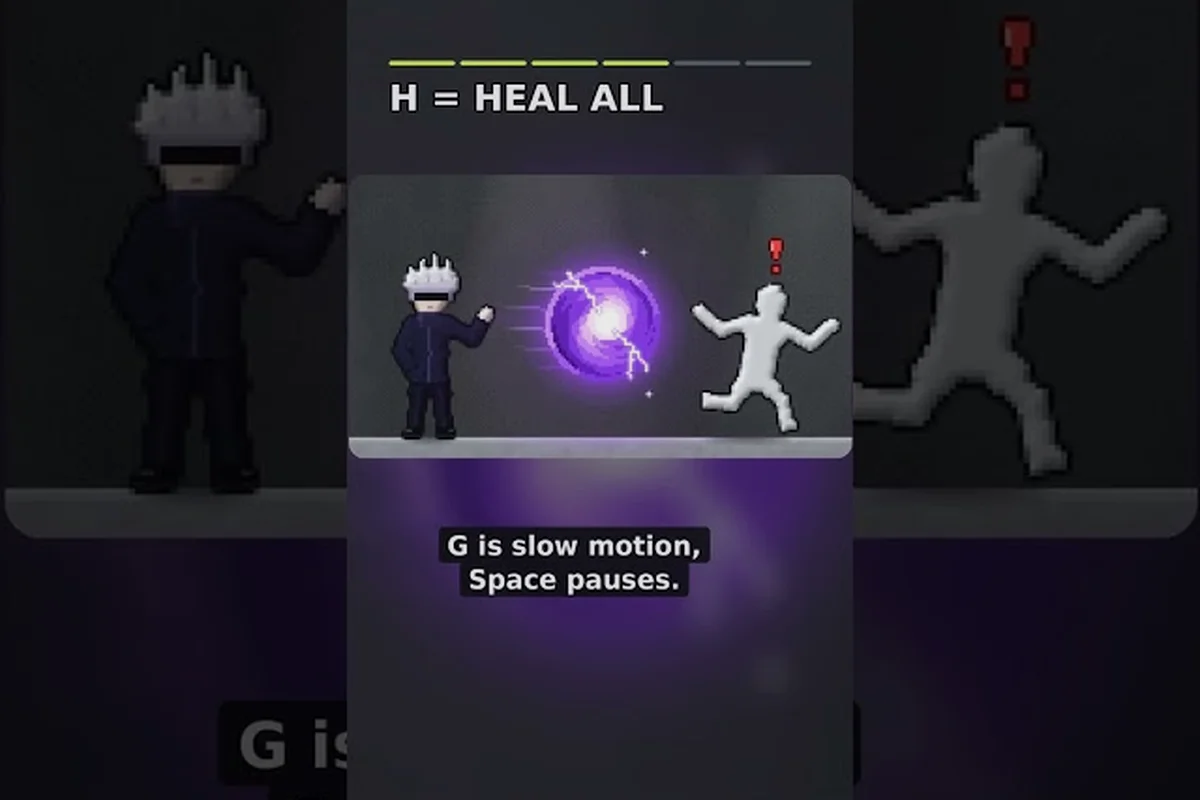
Slow motion is useful for seeing the start of an interaction, not just its final state. Pause when a stream changes direction, when lava begins to surround the dummy, or when sand starts sliding over a body. These instants can reveal whether a sudden movement came from collision, fluid force, or the heat effect itself.
One-variable-at-a-time testing is more reliable than adding every element at once. If you change the room and the material simultaneously, it becomes difficult to tell which factor produced the reaction. The Ragdoll Playground element combinations guide offers a broader look at multi-material setups once the basics are consistent.
Frequently Asked Questions
Does fire behave like lava in Ragdoll Playground?
No. Fire spreads through available space and clings to nearby surfaces, while lava flows, pools, and surrounds objects. The most useful ragdoll playground fire vs lava test keeps the dummy position constant and compares spread direction with fluid depth and sustained contact.
How do I burn the dummy without using lava?
Place a fire source near the dummy in an open area, then let the flames develop naturally. This is the clearest way to learn how to burn the dummy because it separates spreading flames from lava’s weight and pooling. Keep water or sand out of the first trial so the fire has room to expand.
Why does the dummy float in some lava tests?
The body may be less dense than the simulated liquid, partly above the surface, or caught against a barrier. Build a deeper pool, change the room angle, and observe the body over time. A stable lava environment can still provide sustained contact even when the dummy rises partway out.
Can sand put out fire in the sandbox?
Sand can cover flames and restrict their exposed area, but the result depends on coverage and placement. Try a thick layer above the fire or dummy, then compare it with water. Sand buries and weighs down, whereas water spreads, cools, and displaces, so their roles are not identical.
Is water always better than sand against lava?
Neither material is universally better. Water can flow around the lava and move the dummy, while sand can redirect or cover part of a pool. The useful comparison is ragdoll playground sand vs water under the same room conditions: observe coverage, displacement, and whether the dummy remains trapped in the hot area.
Ragdoll Playground fire physics become easier to understand when you treat fire, lava, water, and sand as different physical systems. Fire spreads, lava flows and pools, water levels and displaces, and sand piles and buries. By holding the dummy position constant, changing one material at a time, and measuring both movement and contact, you can turn every trial into a clear demonstration of the sandbox’s heat and fluid mechanics.